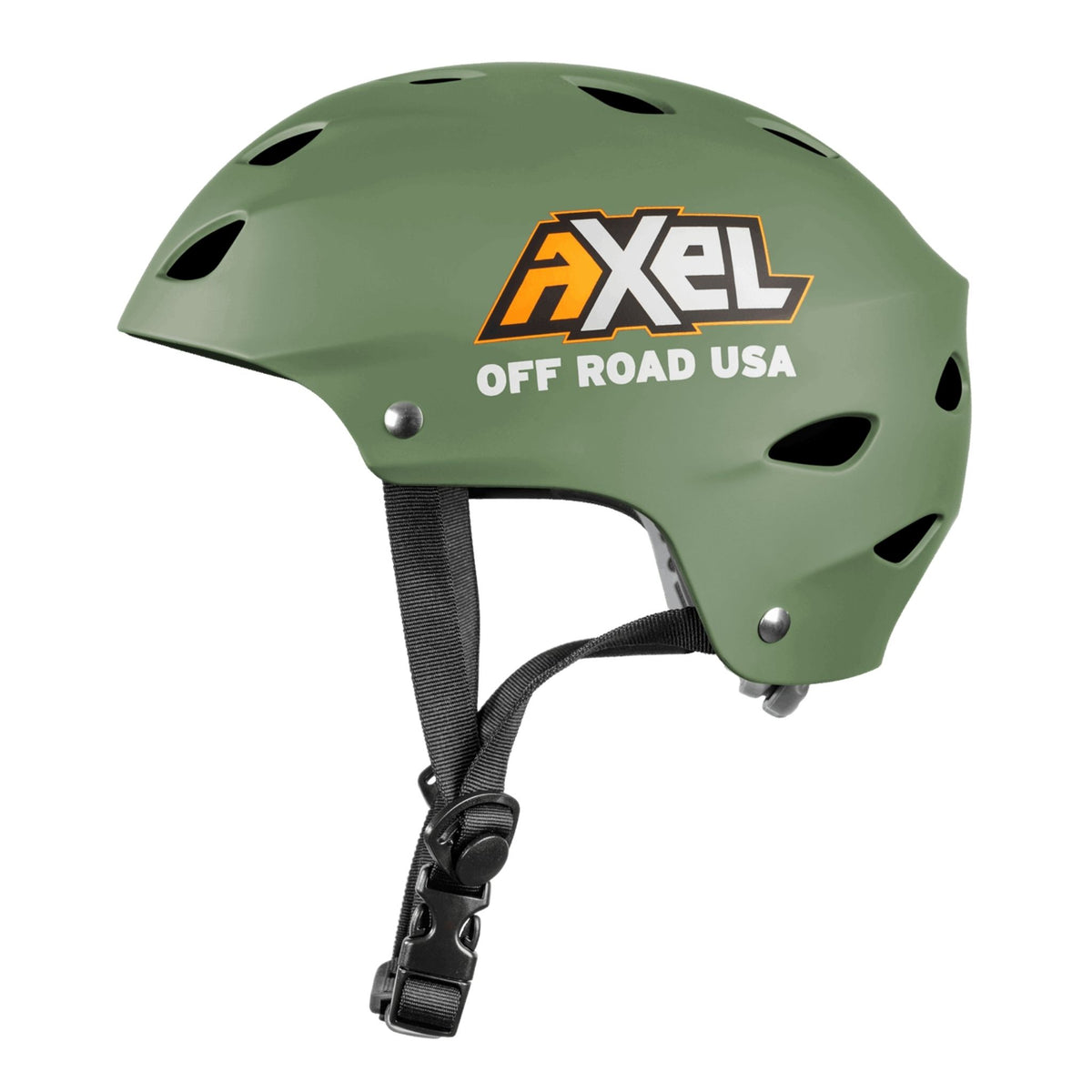


Side by side helmets are easy to ignore right up until the moment your head bumps the roll cage getting in, you tag a door bar on a rough bounce, or a branch slides into the cab at the worst time. If you drive a UTV (utility task vehicle) or side-by-side (SxS), a DOT-certified helmet is often the minimum bar for trail systems, rentals, and plenty of local OHV rules. Even when nobody is checking at the gate, it is still one of the smartest pieces of gear you can throw on before you start riding.
We are AXEL Off Road, and we built our helmets around what actually happens in off-road rigs. A lot of real hits happen inside the cockpit from cage tubes, rocks, trees, and loose gear. So let’s keep this simple: below are the five most common DOT helmet styles that work well for side-by-sides, what your cab setup looks like, and how much airflow you want on a long day.
Why side by side helmets and DOT certification matter on real trails
DOT certification means a helmet meets the U.S. Department of Transportation minimum safety requirements under FMVSS No. 218. In plain terms, it is the baseline standard you will see referenced most often across the U.S. That little DOT mark on the back of the helmet is what rental counters, trail systems, and event staff tend to recognize as necessary without a debate.
Also, a quick trailhead rule we stick to: avoid buying used helmets if you can. A shell can look fine and still have internal damage that you cannot see. Hidden damage can compromise protection on the next impact, which is exactly why “looks okay” is not the same as “still good.”
Side by side helmets and the roll cage reality: what changes in a UTV cockpit
In a side-by-side, you are belted in and surrounded by structure. That changes what you are likely to hit. Instead of a scary “head-to-ground” situation, the more common problem is your head meeting the roll cage, frame, and interior during a sudden stop, a weird bounce, or a slow-motion tip that gets chaotic fast.
That is why helmet shape and bulk matter more than people expect. If your helmet is too tall or too wide, you feel it when you look over your shoulder, lean forward, or settle into the seat with a headrest behind you. Even with seatbelts and a roll cage, riders still take hits in a rollover and deal with sand, debris, and branches. The cage is not a force field. For the full rundown, see our trail safety tips.
DOT helmet style #1 for side by side helmets: full-face off-road (goggle-ready)
If your rides are dusty, faster, or more wide-open, a full-face off-road helmet is a safe bet. You get chin and jaw coverage, plus a goggle opening that is meant for real airflow. This is the classic setup for roost, silt, and all-day wind.
In a side-by-side, full-face also makes sense for the little, annoying interior hits that can ruin your day. A chin bar does not make you invincible, but it can add coverage when your head snaps forward and you meet something you did not plan on meeting.
- Best for: faster trail days, dust, desert, dune runs, riders who want more facial coverage
- Tradeoffs: can be bulkier in tighter cages giving more stress to your neck on smaller bumps; you will want goggles that seal well with the helmet opening
DOT helmet style #2: half helmet (shorty) for side-by-side comfort
Half helmets stay popular in side-by-sides for a simple reason: they are light, breathable, and easy to live with when you are climbing in and out all day. They also play well with sunglasses, dust masks, and headset mics. If you are the one spotting lines, talking to the passenger, or hopping out to stack a rock, the simplicity is nice.
This style often fits slower-speed rock crawling, wooded cruising, and rigs with a windshield or full cab where wind blast is toned down. You are still getting head protection, just without the bulk of a chin bar.
- Best for: rock crawling, lower speeds, hot-weather rides, riders who prioritize lightweight comfort
- Tradeoffs: less face and chin coverage from branches, dust, and interior contact points
DOT helmet style #3: modular (flip-up) for talk-heavy side-by-side days
Modular helmets give you full-face coverage when the chin bar is down, then flip up when you are stopped to talk, sip water, deal with comms, or check your map without fully removing the helmet. If you ride with family, guided groups, or friends who like to plan every obstacle out loud, modular can feel like a quality-of-life upgrade.
Two practical tips if you go this route. First, confirm the helmet is DOT certified as-built, not just “similar to” a certified version. Second, make sure it stays planted when you look down and side-to-side, because modulars can be a little heavier and taller.
- Best for: group rides, family rides, tours, riders who communicate a lot in the rig
- Tradeoffs: usually heavier and larger than a shorty; more moving parts and latch points to maintain
DOT helmet style #4: open-face (three-quarter) for visibility and versatility
Open-face, also called three-quarter, is the middle ground. You get more wraparound coverage than a half helmet, but your face stays open for airflow and easy conversation. A lot of riders like this feel in road-legal UTVs or mixed-use rigs where the day includes a little bit of everything.
Just do not sleep on eye protection. If your face is open, you still need a plan for dust and brush. Some riders prefer goggles, others prefer a shield depending on the helmet design and the kind of riding you do most.
- Best for: mixed terrain, casual trail days, riders who want more coverage than a shorty without a full chin bar
- Tradeoffs: chin and face still exposed; eye protection becomes a must-have instead of a nice-to-have
DOT helmet style #5: dual-sport or adventure for side-by-side “everything” rides
Dual-sport and adventure-style helmets blend an off-road peak visor with a more enclosed design, often including a face shield. That can be handy when your day goes from dusty trail to longer connector roads and back, or when the weather changes mid-ride.
The big thing to watch in a side-by-side is clearance. The peak visor can sit higher, so check how it feels under your roof, near your headliner, and when you are strapped in tight. Also, not every dual-sport helmet plays nicely with goggles, so make sure your setup works before you commit.
- Best for: varied terrain, longer rides, riders who want face-shield flexibility
- Tradeoffs: can be taller with visor clearance concerns; goggles compatibility varies by model
Fit comes first for side by side helmets: what to check before you buy
Helmet style is the fun part. Fit is the part that actually decides whether you will wear it all day. You want snug and stable, with even pressure around the crown. If the helmet shifts when you shake your head “no,” it is too loose. If it creates hot spots fast, the size or head shape match is off.
Start with a quick measurement and save yourself the headache of guessing. Then keep these two real-world sizing notes in your pocket:
- GRIT fit: the GRIT D.O.T. Helmet runs a comfort fit, so if you are between sizes, go down.
- Trail fit: the Off Road Trail Helmet runs a snug fit, so if you are between sizes, go up.
One more thing we will always say out loud: if your helmet takes a significant hit, replace it. Damage is not always visible, and a helmet is not meant to be a forever item after a hard impact.
AXEL picks: lightweight DOT-certified side by side helmets built for the cage
If you want DOT-certified protection without feeling like you are wearing a bowling ball in a tight cockpit, this is exactly why we built the GRIT line. AXEL Off Road started in 2012 when father and son Axel and Marvin Stammel got tired of taking hits from the roll cage and decided to build the helmet they wished existed. We still design with that same “inside the rig” reality in mind.
Our GRIT D.O.T. Helmet uses a fiberglass shell and weighs 1.4 lb (700 grams). It has 12 ventilation channels, a goggle strap clip, a quick release buckle, and a fit that works with behind-the-head headset intercoms. It is D.O.T. FMVSS No. 218 certified for riders who need DOT for on-road and off-road use.
If you want to cut weight further for long days, the Special Edition Carbon Fiber GRIT D.O.T. Helmet drops to 1.2 lb with a carbon fiber shell. Same idea, less mass on your neck when the ride turns into an all-day affair.
Either way, our goal is simple: comfort keeps it on. A helmet left on the seat does not help you when the trail gets rough.
FAQ: side by side helmets and DOT choices
Do you really need DOT for side-by-side riding?
DOT is the most commonly recognized baseline in the U.S., and it is often required for rentals, managed trail systems, and some local OHV rules. Requirements vary, so check the rules where you ride, especially if you travel.
Are half helmets a smart pick for side-by-sides?
They can be a solid match for lower-speed trail riding and rock crawling, especially since many impacts in a side-by-side happen inside the cockpit. The tradeoff is less face and chin coverage, so match the helmet to your speeds, terrain, and how tight your trails are.
Is a modular helmet okay for UTV riding?
Yes, if it is DOT certified and fits snug with the chin bar down. Modulars can be especially handy when you communicate a lot or want quick access for stops without pulling the helmet off.
How tight should your helmet feel?
Snug and stable, with even pressure all around. It should not shift when you shake your head. It also should not create painful pressure points after a few minutes. If either happens, change size or try a different helmet shape.
Should you replace your helmet after a crash or hard hit?
Yes. Even if the shell looks fine, internal materials can be compromised. If it took a real impact, retire it and replace it.
Conclusion: choose the side by side helmets style you will actually wear
The best helmet is the one that fits your head, fits your rig, and stays on from the first obstacle to the last mile back to camp. Full-face, half, modular, open-face, and dual-sport styles can all work in a side-by-side as long as you pick the right tool for your vehicle and terrain and stick with DOT certification when your riding plan calls for it.