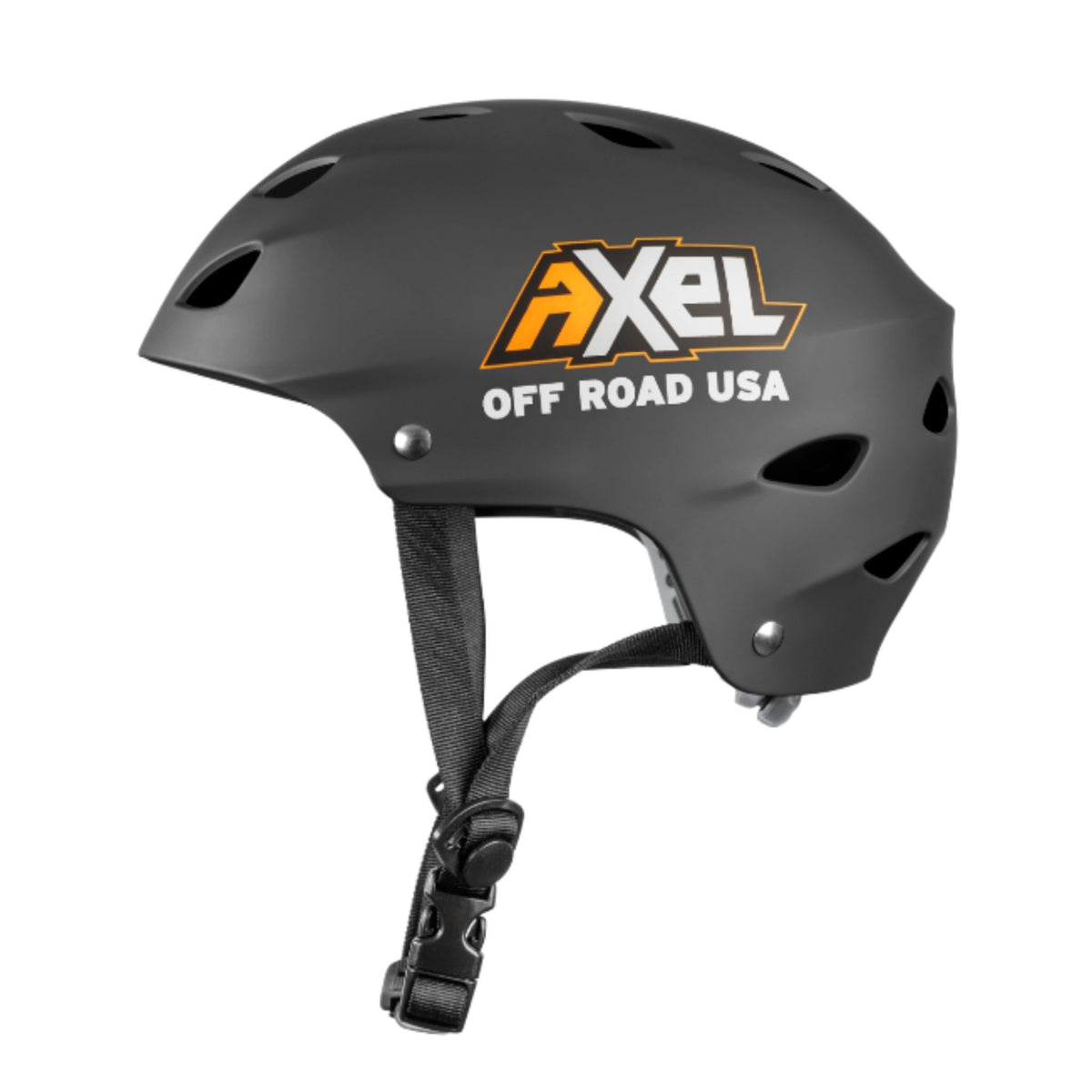


UTV helmets are the piece of gear you do not want to shop for after the fact. In a utility task vehicle (UTV), you are strapped in, surrounded by a roll cage, door frames, and hard surfaces that do not care if you are going 5 mph or 35. If your head finds the cage, a helmet is what helps keep that moment from turning your day on the rocks into a problem.
We are AXEL Off Road. Axel and Marvin Stammel started building helmets back in 2012 because they were tired of getting tagged by the cage while wheeling. Same goal today: build a half-shell helmet you will actually keep on, because comfort and visibility are part of safety out here.
Why UTV helmets still matter inside a roll cage
A harness and a good cage are huge. They alone are not the whole story. In a hard hit or rollover, your head can still whip into the roll cage, the door frame, or even the passenger next to you. That is not theory, it is exactly why helmets are recommended for side-by-side occupants even when you are belted in.
Dirt Wheels calls it out in their UTV and ATV helmet buyer’s guide, noting that strapped-in occupants have still taken head hits in crashes. If you have ever watched a rig get bounced sideways into a rut, you already know how fast “slow riding” can turn into “everything moves at once.”
UTV helmets and DOT basics (what the label actually means)
If you ride trails with public-road connectors, hit parks with strict entry rules, or just want a clear baseline, DOT matters. DOT refers to the U.S. Department of Transportation standard, and the spec behind that sticker is FMVSS No. 218.
If you like reading the source material, check out the AXEL Off Road safety page for more details on UTV helmets and guidance on DOT certification. The takeaway for you is simple: when a helmet is DOT certified, it is built and labeled to meet that federal performance standard.
UTV helmets buying guide: DOT vs Trail when you are picking an AXEL helmet
This is the fork in the road for most riders.
- Choose a DOT helmet when DOT is required where you ride, or when your rides include roads or connectors that push you into DOT rules.
- Choose a Trail helmet when you are staying in low-speed trail systems and rock crawling areas where DOT is not required, and you want the lightest, easiest all-day option.
If you are unsure of the terrain you'll ride be safe and go with DOT helmets regardless of what you're riding and how fast. Always check the rules for the specific place you are riding. Parks, events, and states can all be different, and nobody wants to get turned around at the gate.
AXEL Off Road UTV helmets for adults and kids (quick comparison)
Every helmet below is a half-shell helmet built for off-road vehicles, with the weights and certifications listed the way we offer them.
| AXEL helmet | Certification | Weight | Best fit and use |
|---|---|---|---|
| GRIT D.O.T. Helmet (GRIT) | DOT (FMVSS No. 218) | 1.4 lb | All-day riding when DOT is required; comfort fit sizing; 12 ventilation channels |
| Special Edition Carbon Fiber GRIT D.O.T. Helmet | DOT (FMVSS No. 218) | 1.2 lb | DOT needs with less weight for less neck fatigue on rough sections |
| D.O.T. Off Road Trail Daytona Helmet | DOT (FMVSS No. 218) | 1.7 lb | DOT coverage in a compact trail profile |
| Off Road Trail Helmet | Not DOT | 0.6 lb | Low-speed trail riding and rock crawling; snug fit sizing; 17 ventilation channels; hand dial sizing system |
| Kid's D.O.T. Off Road Trail Daytona Helmet | DOT (FMVSS No. 218) | Varies by size | Recommended for kids 8 and younger; half-shell with dual-density EPS liner |
If you want to browse all models and colors in one spot, start at the AXEL Off Road helmets collection.
How to size UTV helmets correctly (and why it feels different by model)
A helmet that is loose is a problem. A helmet that is too tight turns into the helmet you take off at lunch and “forget” to put back on. You want snug and stable, without pressure points that make you miserable after an hour.
- Wrap a soft tape measure around your head at the widest point, usually just above the eyebrows and around the back.
- Match that number to the sizing chart for the exact model you are buying.
- When you try it on, it should sit level, feel even all the way around, and not rock forward and back.
- Snug the chin strap. With the strap properly tightened, you should not be able to roll the helmet off by pushing up from the back.
Our fit notes by model are straightforward:
- GRIT D.O.T. Helmet (GRIT): runs a comfort fit. If you are between sizes, go down.
- Off Road Trail Helmet: runs a snug fit. If you are between sizes, go up.
UTV helmets comfort: what keeps you wearing it all day
If you have ever set your helmet on the seat “just for this first section,” your helmets comfort is a problem. A helmet only helps when it is on your head. So when you are comparing options, look past the paint and focus on the stuff you feel at mile 30.
- Low weight: It is not about bragging rights, it is about your neck at the end of the day. That is why we share the real numbers like 1.4 lb for the GRIT D.O.T. Helmet (GRIT), 1.2 lb for the carbon fiber GRIT, and 0.6 lb for the Off Road Trail Helmet. Dirt Wheels Magazine gave the GRIT five stars in its product evaluation of the GRIT D.O.T. Helmet.
- Ventilation channels: Heat builds in a cab, and slow crawling does not push much air. The GRIT has 12 ventilation channels, and the Trail Helmet has 17.
- Padding you can live with: Soft padding, easy cleaning, and a fit that does not create hot spots matters more than people realize.
- Goggle compatibility: Dust is part of the deal. Make sure your helmet and goggles play nice together so you are not fighting a strap all day.
- Headset-friendly fit: If you run comms, you want a helmet that cooperates with behind-the-head intercom setups without making your ride and visibility restricted.
Need eye protection that is ready for roost and silt beds? Pair your helmet with our goggles and keep your vision clear when the trail turns into a dust line.
UTV helmets for kids and passengers: make it easy to do it every ride
If your rig is the family hauler, or you are the one giving buddies the passenger seat, make helmets part of the routine. The easiest win is keeping them in the vehicle like you would a tow rope or an extinguisher. Put them on before you start the engine, not after you are already lined up to an obstacle.
For kids, skip the idea of squeezing them into an adult helmet. Use a youth model built for their size and ride style. The Kid's D.O.T. Off Road Trail Daytona Helmet is recommended for kids 8 and younger, and it is DOT certified with a dual-density EPS liner.
FAQ: UTV helmets and side-by-side (SxS) helmets
Do you still need a helmet in a side-by-side with doors and harnesses?
Yes. You can still strike the roll cage or interior in a hard impact or rollover. That is why we recommend a helmet any time the rig is moving, belts and rollover protection or not. You will find the full rundown in our trail safety tips.
Are all “trail helmets” DOT?
No. “Trail helmet” describes intended use, not a certification. Our Off Road Trail Helmet is not DOT. Our GRIT and Daytona D.O.T. models are DOT (FMVSS No. 218) certified.
What matters most when you are buying UTV helmets?
Certification for where and how you ride, then comfort features that keep it on your head. Weight, ventilation, and sight lines are a big deal inside a roll cage.
How do you know if your helmet fits correctly?
It should sit level, feel snug all around, and not rock when you move your head. With the strap tightened, it should stay put when you try to lift it from the back.
What if you order the wrong size?
It happens, especially if you are between sizes or buying your first half-shell helmet. Reach out on our AXEL Off Road contact support page and we will help you sort sizing and exchanges so you end up with a helmet you will actually wear.
Conclusion
UTV helmets are a small decision that shows up big on the trail. Match the helmet to where you ride, get the fit right for the model you choose, and prioritize comfort because comfort is what keeps it on your head from the first obstacle to the last mile back to the trailer. If you want a second set of eyes on your choice, message us and we will get you dialed.
For more side-by-side helmet tips and options, check out our detailed blog post on the 5 best DOT-approved side-by-side helmet styles.